
Rooftop Solar
Transform your roof into a powerful solar energy system with our vertical bifacial solar panels.
These slim, aerodynamic modules capture sunlight on both sides — front and rear — delivering maximum energy yield even under challenging conditions. Ideal for commercial buildings, logistics centers, residential flat roofs, office buildings, and renovation projects where traditional solar panels are less suitable or less efficient.
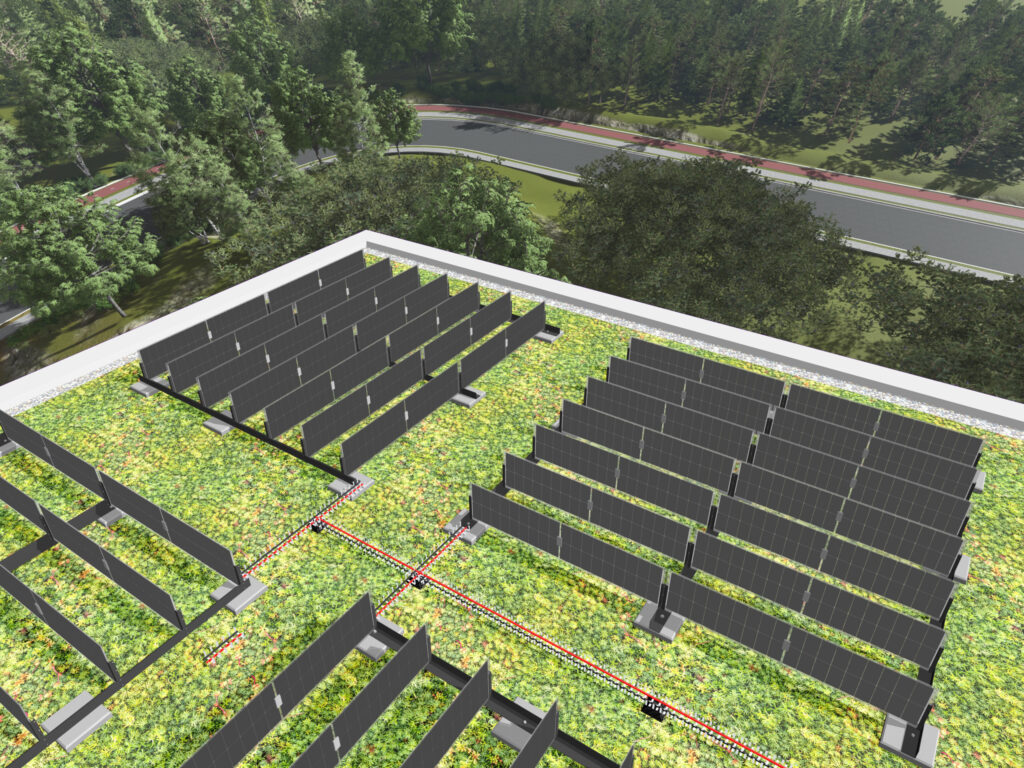
Why Choose Vertical Bifacial Solar Panels for Your Roof?
Unlike standard solar panels, bifacial solar panels generate electricity from both the front and rear sides by using reflected light from the roof surface and surrounding environment. This can increase total energy yield, depending on roof reflectivity and orientation.
Thanks to their vertical positioning, the panels can efficiently capture energy from:
- Morning and evening sun
- Low winter sun
- Diffuse light and reflection
This creates a more balanced annual energy yield, with additional production during months when conventional solar panels typically perform less effectively.
The slim vertical design provides:
- Ideal performance on commercial flat roofs
- Minimal shading between rows
This also makes the panels suitable for roofs with limited load-bearing capacity.
Vertical bifacial solar panels enable:
- Compact layout on flat roofs
- Efficient East–West or North–South configurations
- Optimal use of roof edges and unused rooftop areas
Ideal for roofs where standard 2×1 m solar panels are less suitable.
Thanks to improved airflow around the vertical panels, the modules remain cooler, resulting in:
- Reduced heat loss
- Higher efficiency
- Better performance in summer
Applications of Vertical Bifacial Rooftop Solar Panels
Commercial and industrial buildings - High solar energy yield without heavy ballast or complex mounting systems.
Apartment buildings and residential complexes – A lightweight rooftop solar solution for roofs with limited space.
Logistics centers and warehouses – Perfect for large flat roofs where an East–West setup maximizes daily energy generation.
Renovation and expansion projects – Compatible with existing PV systems for additional solar generation capacity.
Technical Advantages
- High-efficiency bifacial solar cells
- Lightweight, slim design
- Clean and uniform vertical appearance
- Optimal performance in East–West or North–South configurations
- Durable and weather-resistant design for wind, snow, and UV exposure
- Consistent energy production throughout the year
- Long service life and reduced maintenance
- Better ROI through higher bifacial energy yield
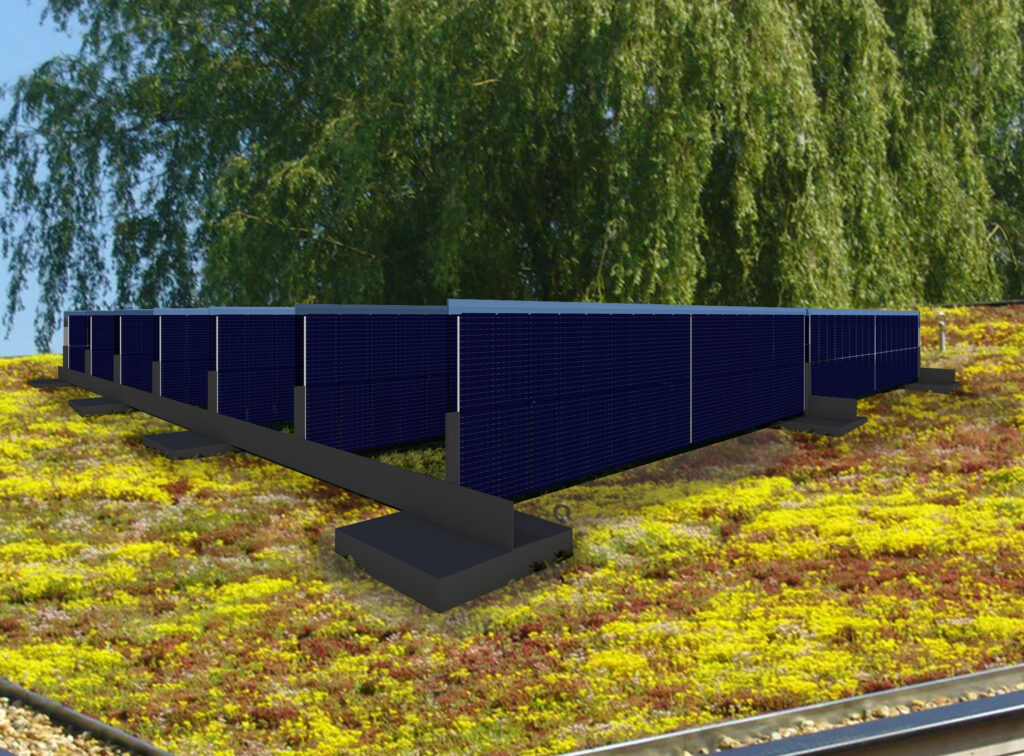
Ready to upgrade your roof with vertical bifacial solar panels?
Request a free feasibility study and discover how much additional solar energy your roof can generate with vertical bifacial solar panels.
✓ Custom engineering
✓ Maximum bifacial energy yield
✓ Lightweight rooftop design
✓ Professional, certified installation
Frequently Asked Questions About Bifacial Solar Panels
Do vertical bifacial solar panels generate enough energy?
Yes. They deliver additional energy yield during periods with low sun angles and generate extra solar energy from the rear side, significantly increasing total annual production.
Are vertical bifacial panels suitable for flat roofs?
Absolutely. Vertical PV systems are particularly well-suited for flat roofs, both commercial and residential.
What type of roof works best?
Roofs with reflective surfaces, such as white EPDM, PVC, gravel, or reflective coatings, maximize bifacial energy yield. However, even on non-reflective roofs, direct and diffuse light can still deliver excellent solar energy production.
Are they safe in strong wind conditions?
Yes. The slim vertical design creates a low wind load, and the installation can be fully engineered to meet the wind-load requirements of your location.
Does vegetation affect solar panel performance?
Vegetation can affect the amount of reflected light from the roof surface, but this represents only a small portion of the light reaching the solar panels. In theory, vegetation may influence performance, but in practice the effect is usually very limited.